Lixel K2
The gold standard in lightweight scanning.
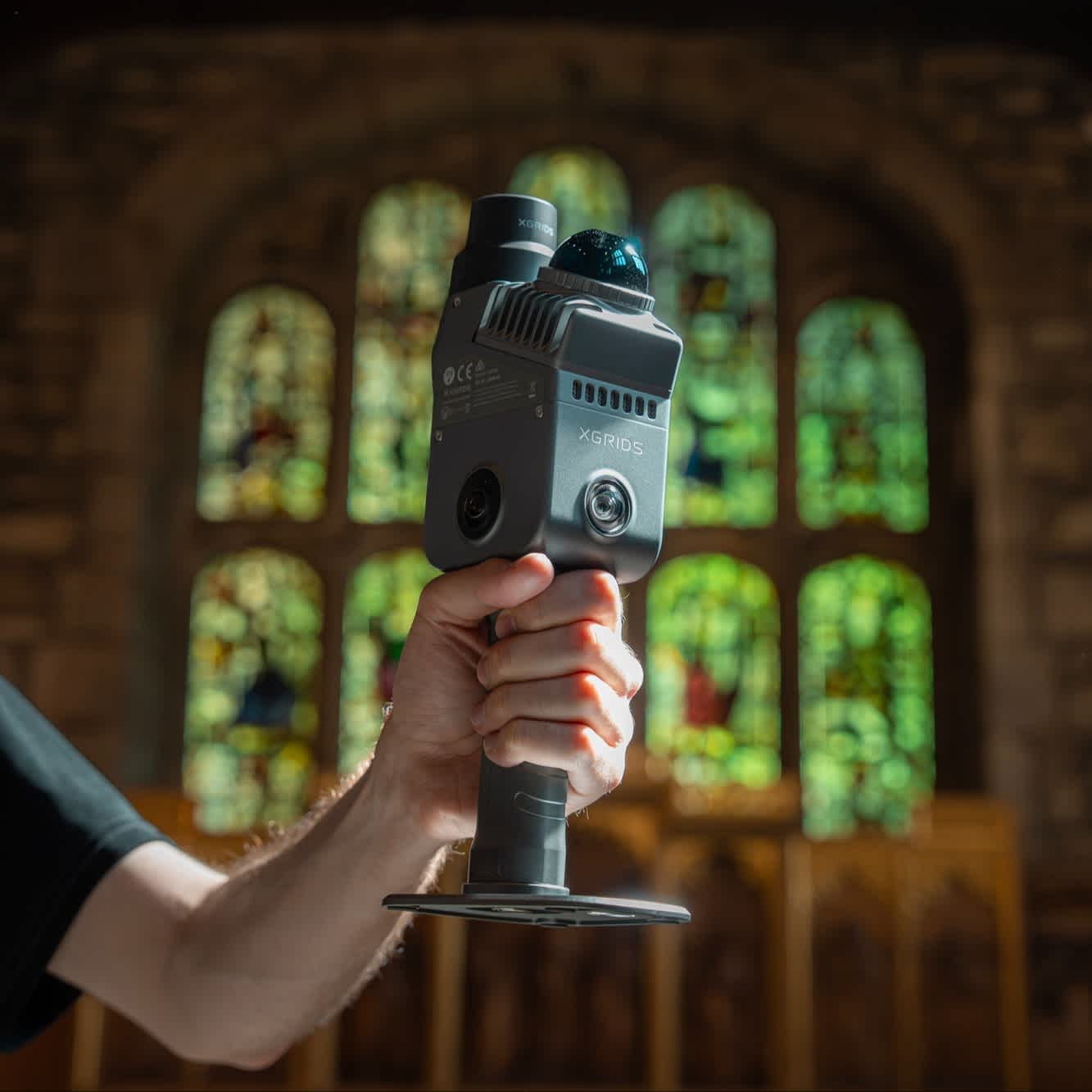
A handheld SLAM scanner with built-in RTK, 1 cm relative accuracy and a 100 m maximum range. At about 1.2 kg in an aviation-grade aluminum body, it is made for a full day of walking.
1 cmRelative accuracy
~1.2 kgWeight
100 mMaximum range
200,000Points per second
1.2kg
Light enough to carry all day, accurate enough to deliver.
The K2 pairs an aviation-grade aluminum body with a built-in RTK receiver, so you carry one lightweight unit instead of a scanner plus an external module.
- WeightAbout 1.2 kg
- HousingAviation-grade aluminum
- Battery1.5 h clip-on, 1,900 mAh
- ProtectionIP54
Unboxing, setup and your first scan
The official guide walks through unboxing the K2, fitting the battery, connecting the Lixel Go app and starting a scan.
01
Fit
Wipe the battery contacts, clip the battery on and confirm the latch is locked.
02
Connect
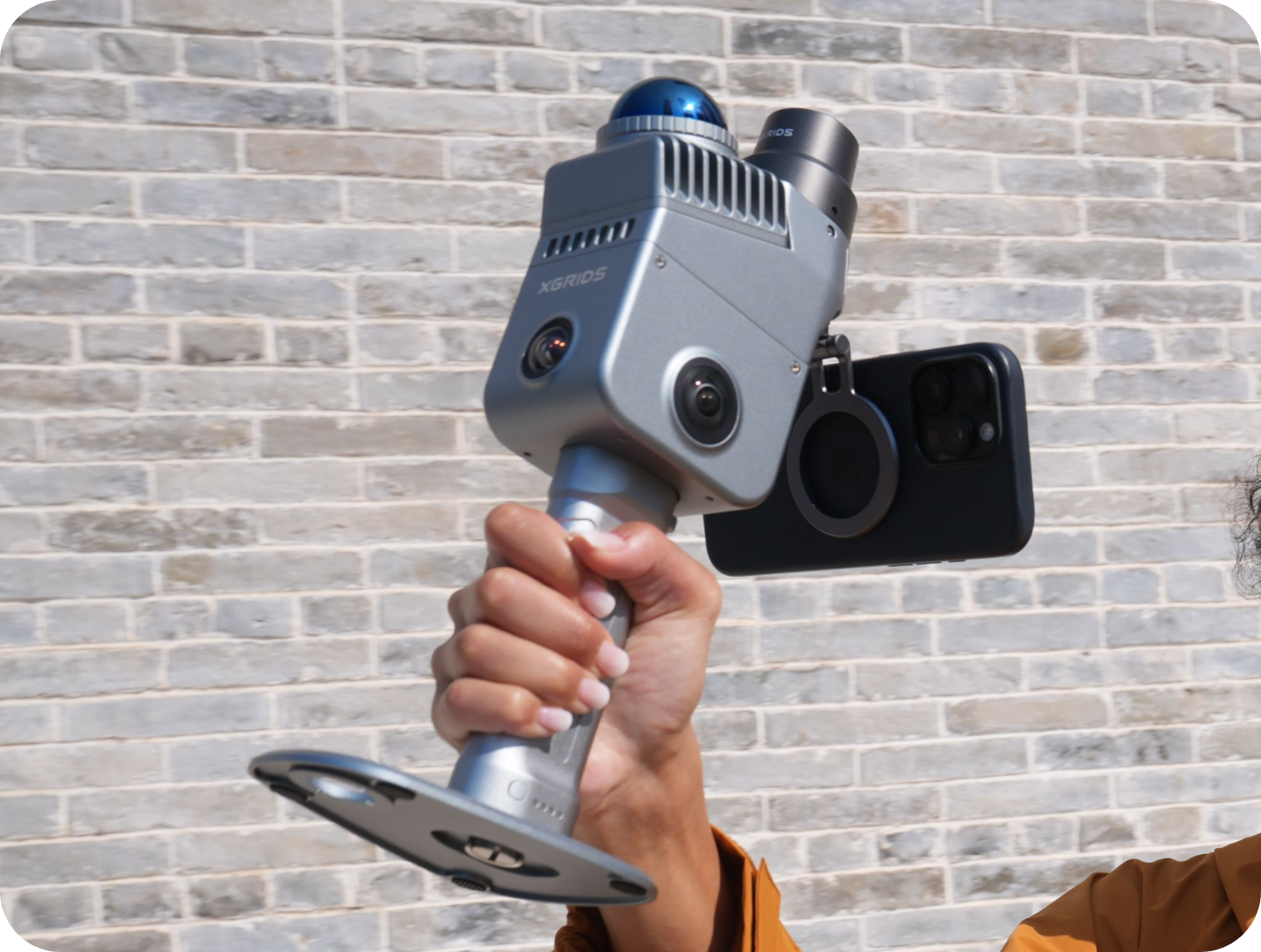
Mount your phone on the scanner and tap the wireless mode button in the Lixel Go app.
03
Scan
Tap the red button in the app, or double-press the button on the device, to start and stop.
Your phone is the screen.
The K2 has no built-in display. Mount your phone and use the Lixel Go app to control the scan and watch the result build up as you walk.
- Real-time color point cloudPreview a colored point cloud on your phone while you scan.
- Historical model reviewOpen earlier scans without leaving the site.
- Control point managementSet up and manage control points in the app.
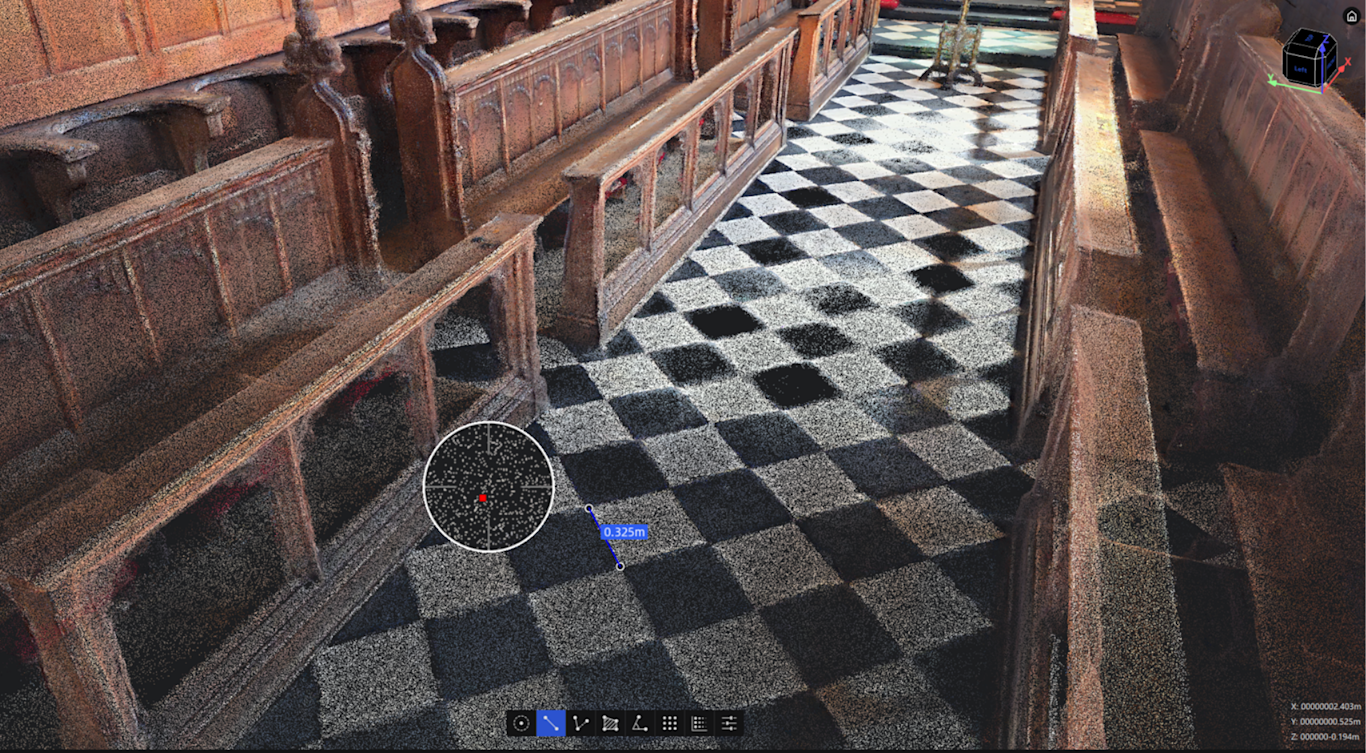
- On-site measurementCheck dimensions on the point cloud before you pack up.
Engineering-grade accuracy in a lightweight body.
XGRIDS specifies 1 cm relative and 3 cm absolute accuracy (RMSE), with a post-processed point cloud thickness of 1 cm or less. That is dimensions you can rely on for walls, openings and clearances.
1 cmRelative accuracy (RMSE)
3 cmAbsolute accuracy, horizontal and vertical (RMSE)
2 cmRepeatability
≤ 1 cmPost-processed point cloud thickness
Figures are published by the manufacturer. Real-time absolute accuracy is 3 cm. Results on site depend on the environment, satellite conditions and the workflow.
One capture, three deliverables.
Point cloud
Thin, clean point clouds with sharp boundaries and true color, for faster drafting in LixelStudio.
Mesh
A surface model from the same capture, for visualization and design review.
3D Gaussian splatting
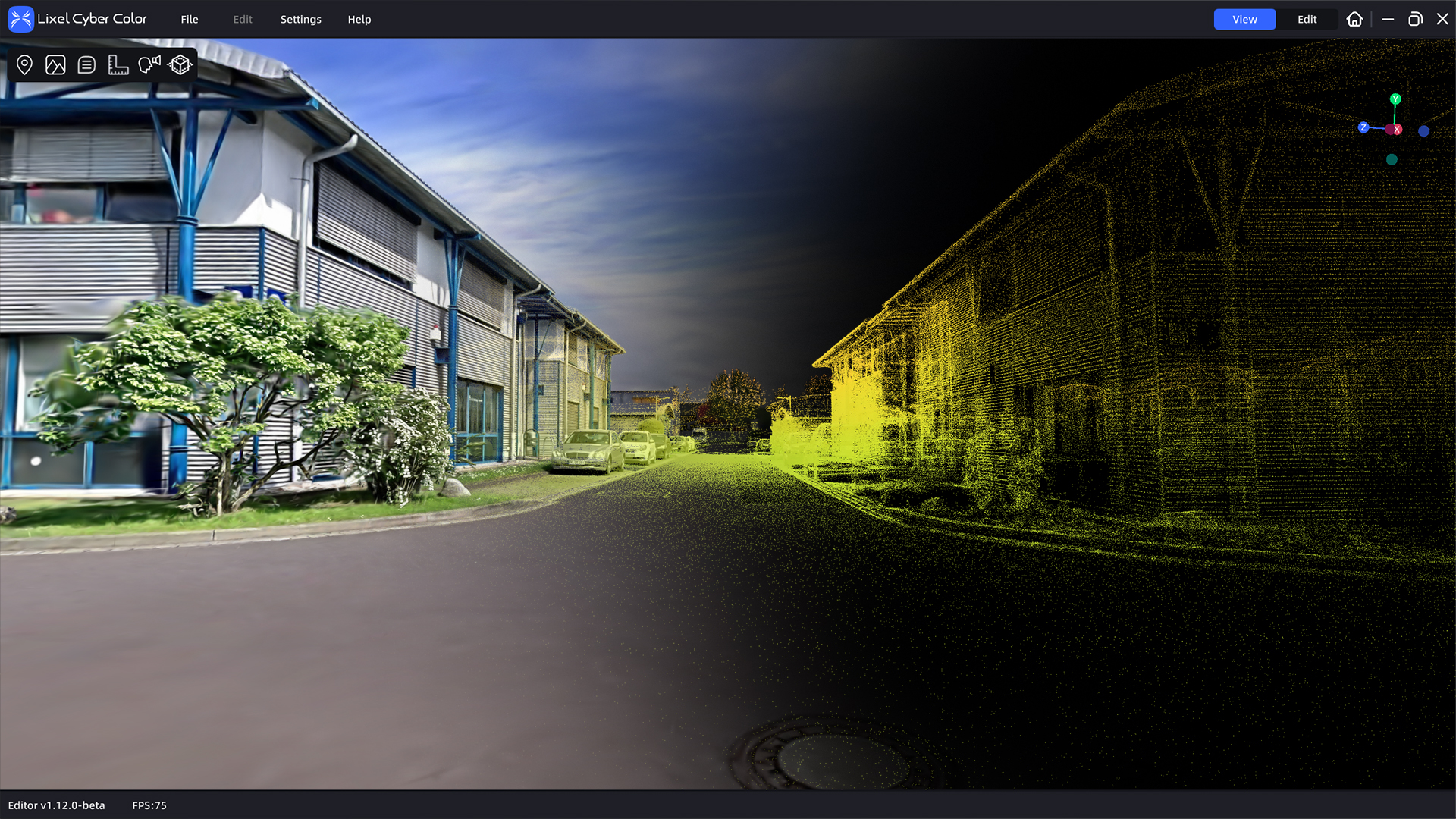
A photorealistic scene processed in Lixel CyberColor, for presenting to people who do not read point clouds.
Where the K2 fits in the XGRIDS range
The K2 is the lightweight, ready-to-go option. It succeeds the LixelKity K1 with tighter accuracy, built-in RTK and a longer range. For more range or higher accuracy, look at the L2 Pro or the L3.
| Lixel K2 | LixelKity K1 | Lixel L2 Pro | Lixel L3 | |
|---|---|---|---|---|
| Relative accuracy | 1 cm | 1.2 cm | 1 cm | 5 mm |
| Absolute accuracy | 3 cm | 3 cm | 3 cm | 2 cm |
| Point rate | 200,000 pts/s | 200,000 pts/s | Up to 640,000 pts/s | Up to 640,000 pts/s |
| Range | 100 m max (40 m at 10%) | 40 m at 10% | 120 m, or 300 m | 120 m |
| Weight | About 1.2 kg | Under 1 kg | 1.7 kg without battery | 2.5 kg with battery |
| Cameras | 3 × 12 MP | 2 × 48 MP | 2 × 48 MP | 3 × 50 MP |
| RTK | Built in | Supported | Fusion with RTK module | Built in |
Based on specifications published by XGRIDS and its partners. Accuracy figures are RMSE, post-processed.
Where it is used
- 01
Engineering measurement
Dimensions for walls, openings and clearances, with a point cloud as thin as 1 cm.
- 02
Heritage preservation
Fast, colored records of historic interiors and structures.
- 03
Stockpile volumetrics
Volume measurement for stockpiles and earthworks.
The software that goes with it
Lixel Go
The mobile app for controlling the scan, with real-time color point cloud preview and on-site measurement.
LixelStudio
Desktop processing for point clouds. Version 4.0 works with the K2, the K1 and the L2 Pro.
Lixel CyberColor
Processes the camera images into 3D Gaussian splatting scenes.
Technical specifications
LiDAR
| Laser class | Class 1, 905 nm |
|---|---|
| Scan range | At least 40 m at 10% reflectivity, 100 m maximum |
| Field of view | 360° × -7° to +52° |
| Point rate | 200,000 points per second |
Accuracy
| Relative accuracy (RMSE) | 1 cm |
|---|---|
| Absolute accuracy (RMSE) | 3 cm horizontal, 3 cm vertical |
| Repeatability | 2 cm |
| Post-processed cloud thickness | ≤ 1 cm |
| Real-time absolute accuracy | 3 cm |
Imaging
| Cameras | 3: two fisheye and one forward-facing |
|---|---|
| Resolution and sensor | 4000 × 3000 (12 MP), 1/2-inch CMOS |
| Field of view | 200° × 200° panoramic, 100° × 85° forward |
Positioning
| RTK | Built in |
|---|---|
| GNSS | Multi-constellation: BDS, GPS, GLONASS, Galileo, QZSS, SBAS |
Hardware and power
| Weight | About 1.2 kg |
|---|---|
| Housing | Aviation-grade aluminum |
| Internal storage | 512 GB eMMC |
| Data interface | USB 3.1 Gen2 |
| Power consumption | Under 20 W |
| Battery | Clip-on, 1.5 hours, 1,900 mAh |
| Operating temperature | -20 °C to 50 °C |
| Ingress protection | IP54 |
| Control | Lixel Go app on a phone |
Outputs and software
| Deliverables | Point cloud, mesh, 3D Gaussian splatting |
|---|---|
| Mobile app | Lixel Go |
| Desktop software | LixelStudio (point cloud), Lixel CyberColor (3DGS) |
Frequently asked questions
How accurate is the Lixel K2?
The manufacturer specifies 1 cm relative accuracy and 3 cm absolute accuracy (RMSE), with 2 cm repeatability and a post-processed point cloud thickness of 1 cm or less. On a real site the result depends on the environment, the scan path and the processing workflow.
Does the K2 have a screen?
No. You mount your phone on the scanner and control it from the Lixel Go app, which shows the live colored point cloud and lets you measure on site.
Do I need an external RTK module?
No. RTK is built into the K2, together with multi-constellation GNSS covering BDS, GPS, GLONASS, Galileo, QZSS and SBAS.
How is the K2 different from the K1?
The K2 tightens relative accuracy to 1 cm from 1.2 cm, adds built-in RTK, uses an aviation-grade aluminum body and extends the maximum range to 100 m.
What can I produce from a scan?
Point clouds and meshes, plus 3D Gaussian splatting scenes through Lixel CyberColor. Ask us about the export formats available in the desktop software.
How long does the battery last?
About 1.5 hours of continuous operation per clip-on battery. The scanner has 512 GB of internal storage.
Can I use it outdoors and in bad weather?
The K2 works from -20 °C to 50 °C and is rated IP54 against dust and splashes. It is not meant for use in rain, so plan outdoor sessions around the weather.